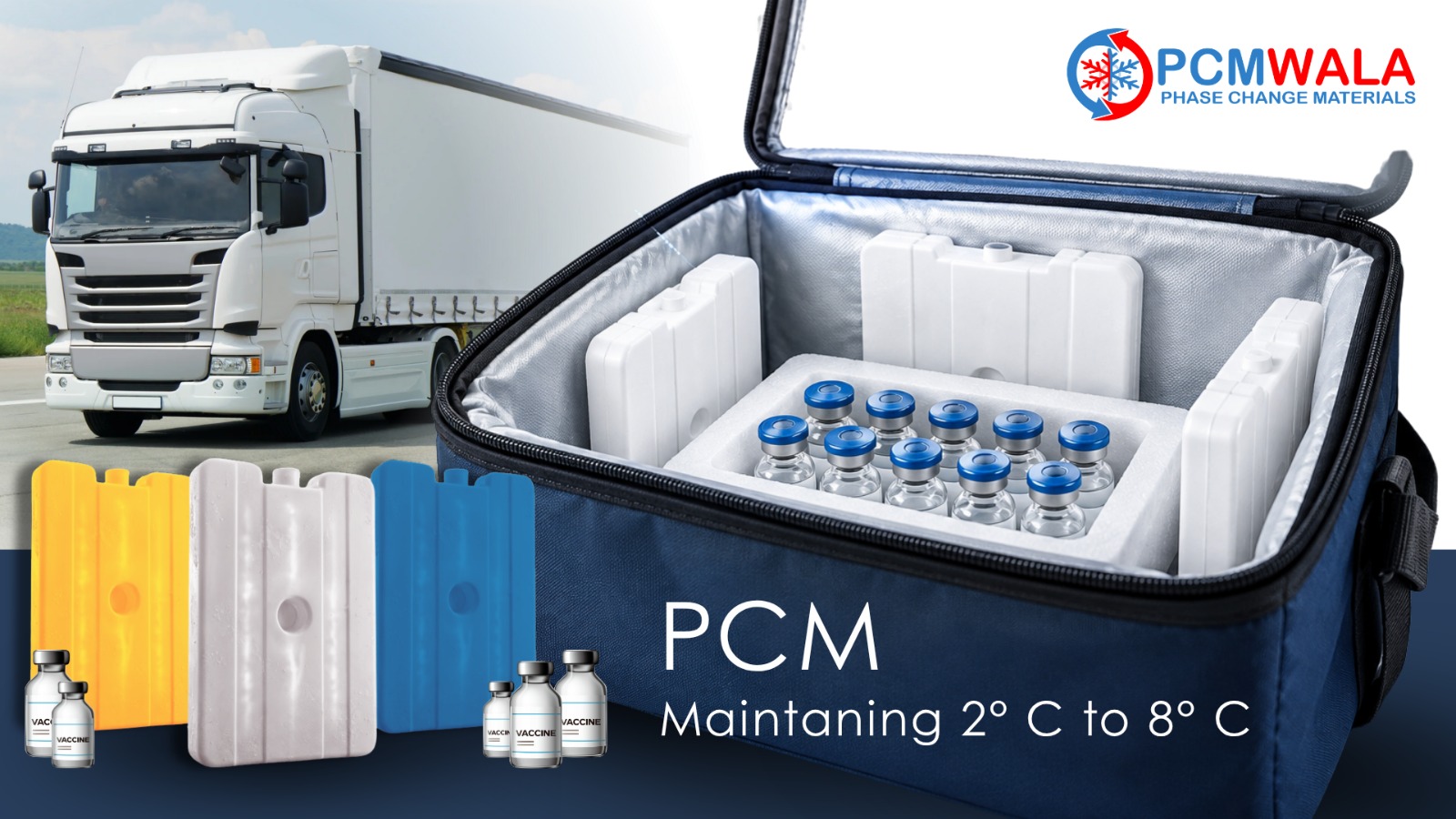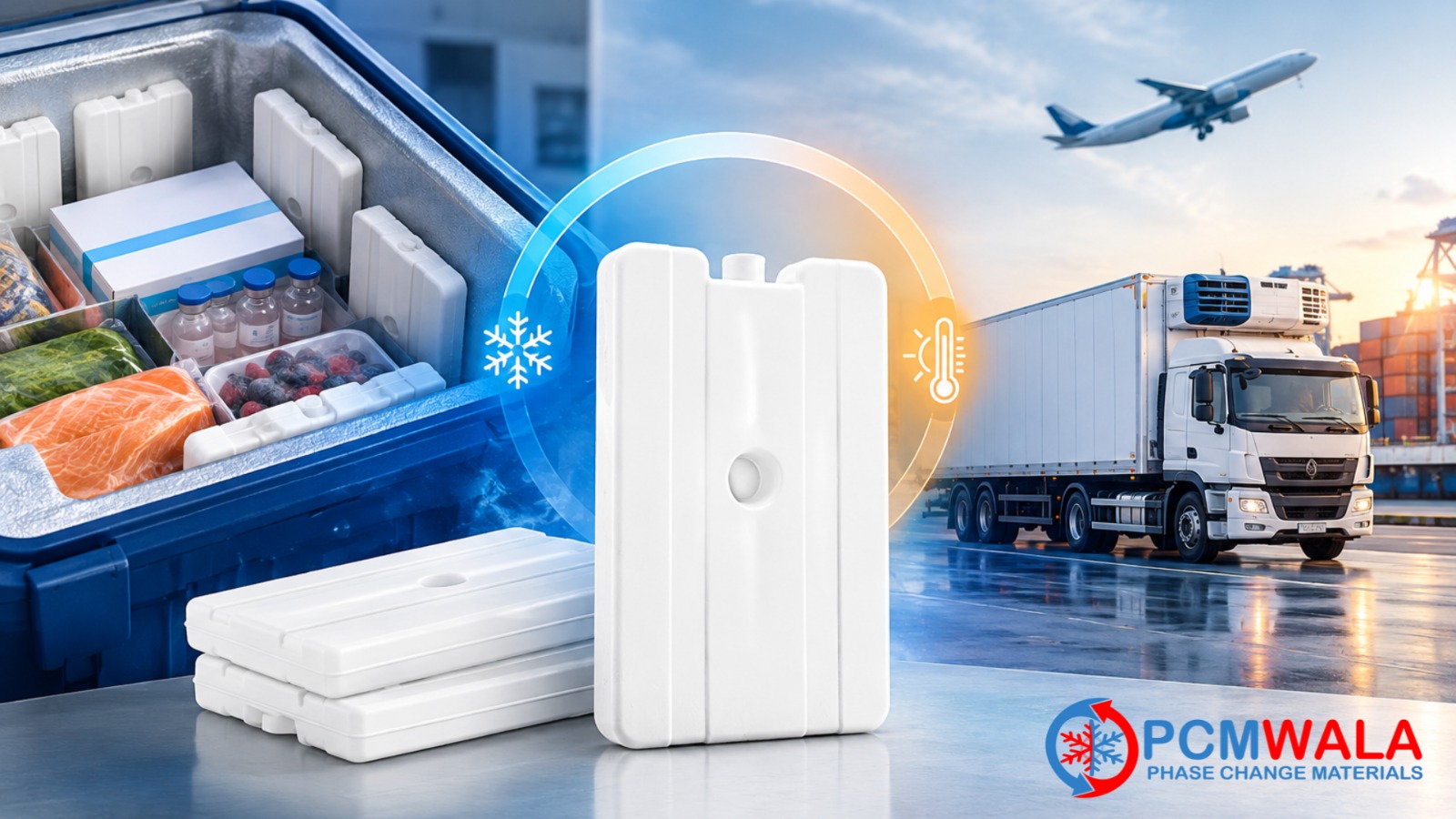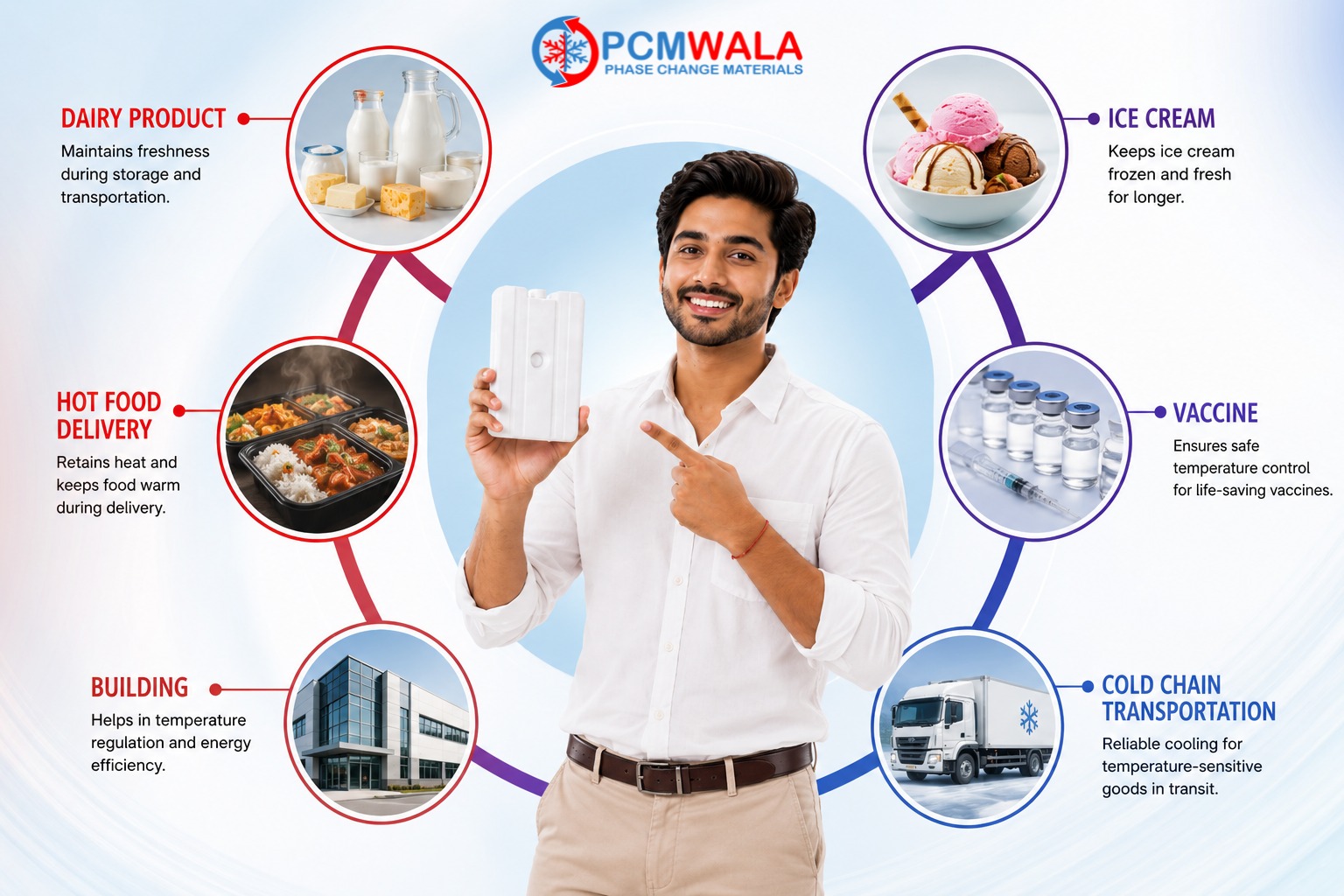
Pharmaceutical products such as vaccines, insulin, and certain biological medicines need careful temperature control during transportation. Even a short exposure to unsuitable temperatures can affect product quality. This makes the PCM for the Pharmaceutical Cold Chain an important consideration for companies handling temperature-sensitive medicines that must remain between 2°C and 8°C.
Phase Change Materials (PCMs) help manage temperature changes by absorbing or releasing heat during a change in physical state. When used with suitable insulated packaging, they can help maintain stable conditions throughout transportation and reduce the risk of temperature excursions.
Why Temperature Control Matters for Pharmaceutical Products
Many pharmaceutical products require strict temperature control to preserve their quality, stability, and intended performance. Vaccines, insulin, certain injectable medicines, and selected biological products may require storage within a defined temperature range, commonly 2°C to 8°C.
Temperatures beyond the recommended range can affect product quality. Freezing can damage some vaccines and biological formulations, while excessive heat may accelerate degradation in sensitive medicines. Even a short temperature excursion can require an investigation and may lead to product rejection if its quality cannot be established.
Temperature management becomes more challenging during transportation because of changing outdoor conditions, loading and unloading activities, delivery delays, and repeated handling.
A dependable pharmaceutical cold chain needs more than just storing products in an insulated container. It needs suitable thermal packaging, appropriate cooling materials, temperature monitoring, and validated handling procedures.

How to Choose the Right PCM for Your Temperature Requirement
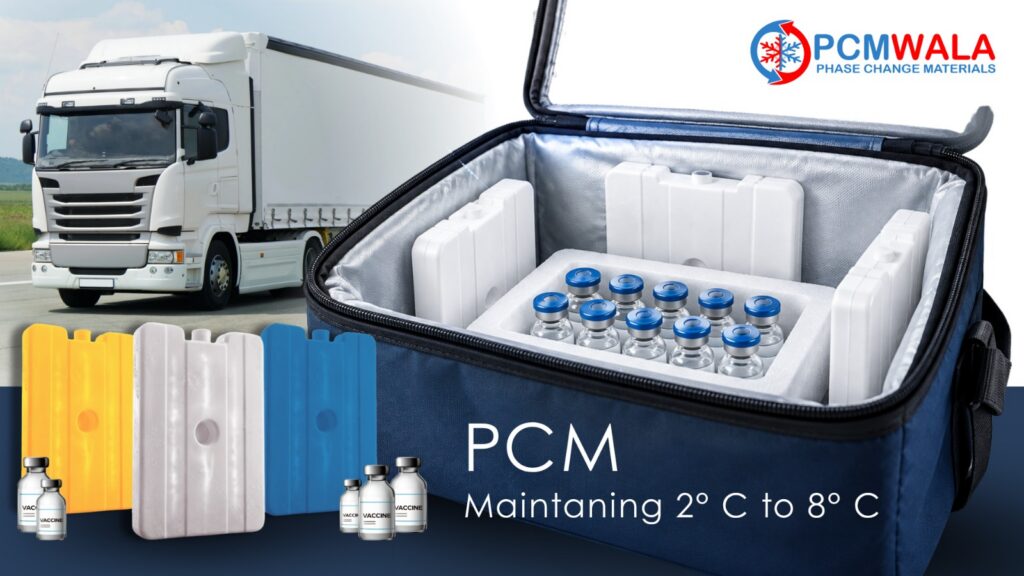
PCM for Pharmaceutical Cold Chain: Maintaining 2°C to 8°C
How Phase Change Materials Strengthen Cold Chain Shipping
India’s advanced pcm soltions & thermal storage company
Understanding Phase Change Material
How To Choose Temperature Controlled Shipper Boxes For Cold Chain Logistics
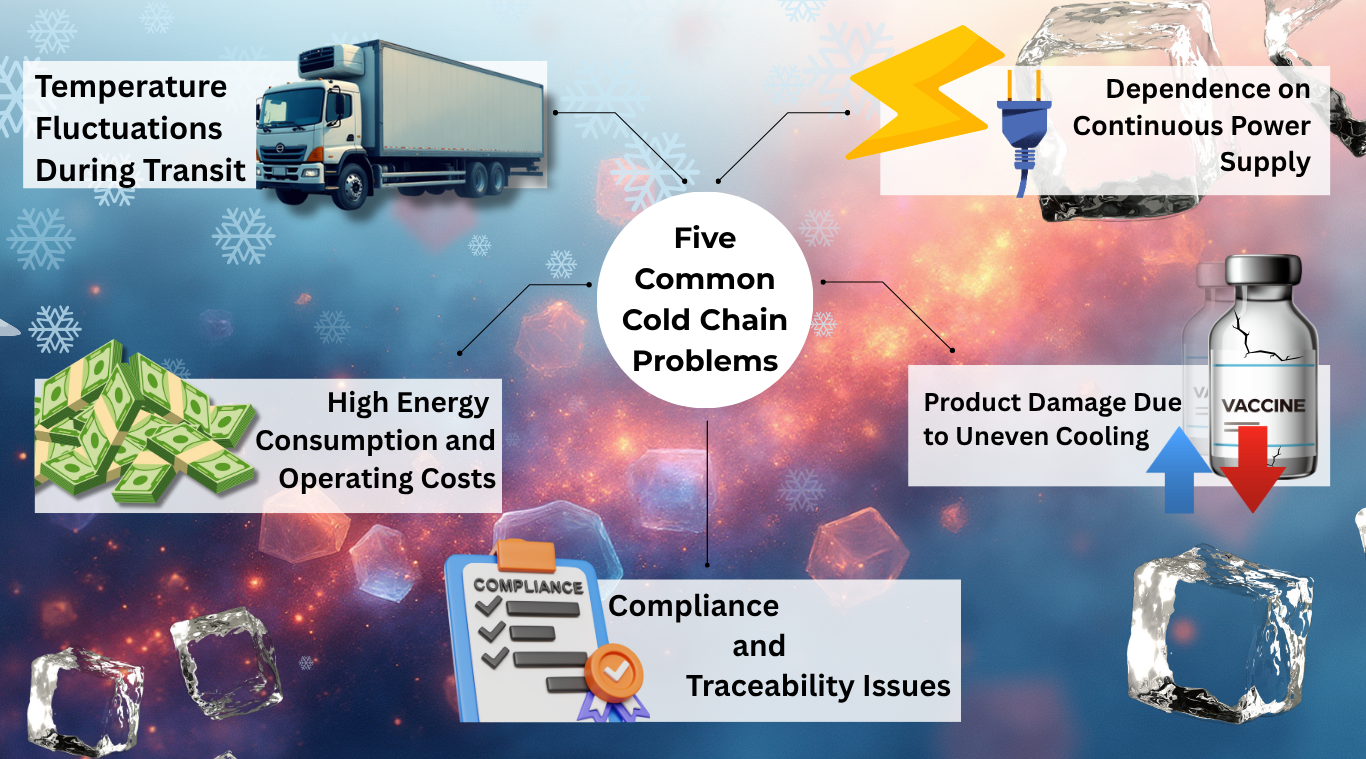
Five Common Cold Chain Problems and How PCM Technology Solves Them
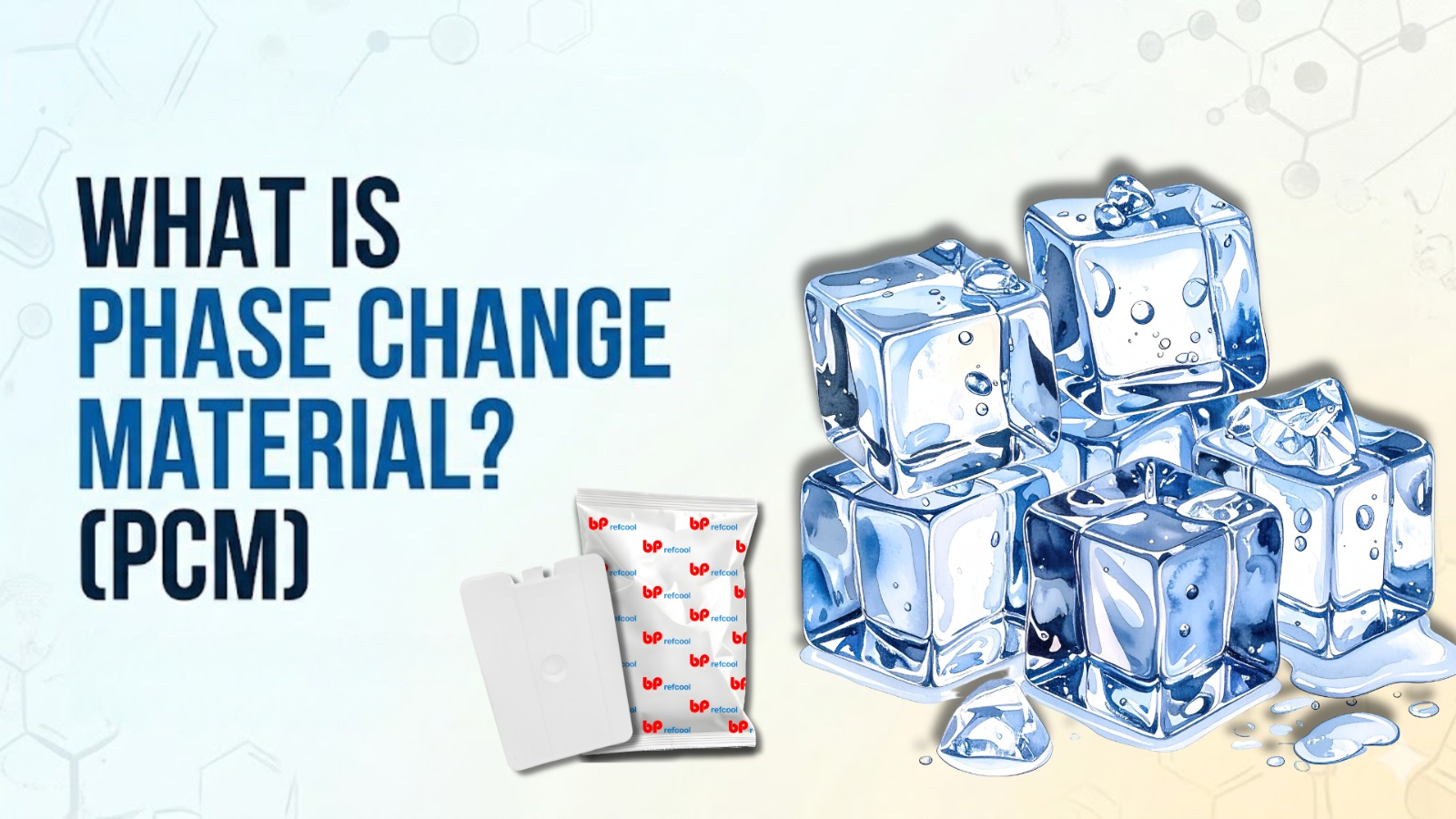
What Are Phase Change Materials (PCMs)?
Phase change materials are substances that absorb or release thermal energy when they change from one physical state to another, such as from solid to liquid or liquid to solid.
For pharmaceutical transportation, PCM formulations can be selected to support a specific temperature range. A PCM designed for a suitable transition temperature can absorb incoming heat during melting and release stored thermal energy during solidification.
This thermal buffering helps slow temperature changes inside an insulated shipping container. Unlike ordinary ice packs, which may create unsuitable freezing conditions if placed incorrectly, temperature-specific PCMs can be selected to support the requirements of particular pharmaceutical shipments.
However, the PCM transition temperature, pack design, quantity, and conditioning procedure must all be appropriate for the product and packaging system.
How Does PCM Help Keep Medicines Between 2°C and 8°C?
To keep medicines within the required temperature range, companies need suitable insulation, properly prepared PCM packs, and packaging designed for the journey. PCM supports this process through the following mechanisms.
1. Absorbing Heat During Transportation
When the surrounding temperature rises, heat can enter the insulated shipping container. A suitably selected PCM absorbs part of this incoming thermal energy as it changes phase, helping slow the increase in internal temperature.
This can be particularly useful during summer transportation, temporary loading delays, and distribution through locations where refrigeration facilities are limited.
2. Reducing Temperature Fluctuations
Pharmaceutical products are sensitive to sudden temperature changes. PCM helps buffer these fluctuations by absorbing or releasing heat around its designed transition temperature.
How well the PCM performs depends on its formulation, the number of packs used, the quality of insulation, outside temperatures, and the length of the journey.
3. Supporting Protection Against Freezing
Certain pharmaceutical products must not be exposed to freezing conditions. A PCM selected for the intended operating range can help reduce the risk associated with unsuitable cooling materials.
However, PCM does not automatically eliminate freezing risks. Pack placement, direct contact with products, conditioning temperature, and the overall packaging configuration must be carefully controlled.
4. Maintaining Thermal Stability During Transit
When used in a properly designed thermal packaging system, PCM can help maintain suitable conditions during transportation from pharmaceutical manufacturing facilities to distribution centers, hospitals, clinics, and pharmacies.
The system must be tested under representative shipping conditions to confirm that it maintains the required temperature range for the planned journey.
Benefits of Using PCM for Pharmaceutical Transport
Using appropriate phase change materials can provide several practical benefits for pharmaceutical logistics.
Temperature stability: Helps reduce temperature variations during transport when used in a validated packaging system.
Reduced freezing risk: Suitable PCM formulations can support temperature-sensitive shipments that must avoid freezing.
Longer thermal protection: Depending on PCM quantity, insulation, and environmental conditions, the system may maintain suitable temperatures for extended periods.
Flexible packaging designs: PCM packs can be incorporated into insulated containers, reusable shippers, and other temperature-controlled packaging systems.
Support for distribution in challenging conditions: PCM-based systems can help manage temperature exposure during last-mile delivery and temporary interruptions in refrigerated infrastructure.
These benefits depend on the complete packaging design rather than the PCM alone. Selecting the right formulation and validating the entire shipping system are essential.
How to Select the Right PCM for the 2°C to 8°C Range
Choosing an appropriate PCM is an important step in developing a pharmaceutical cold chain solution. Buyers and logistics teams should evaluate the following factors.
1. Phase transition temperature: Select a PCM formulated for the intended application and compatible with the required product temperature range.
2. Required hold time: Estimate how long the shipment must remain within its specified temperature limits, including potential delays.
3. Insulation performance: Consider the container’s insulation, dimensions, lid design, and exposure to external temperatures.
4. PCM quantity and placement: The number, size, and positioning of PCM packs influence how effectively heat is managed throughout the container.
5. Conditioning procedure: Follow the supplier’s instructions for preparing PCM packs before use. Incorrect conditioning may reduce performance or introduce freezing risks.
6. Validation and monitoring: Evaluate the complete packaging system through suitable thermal performance testing. Use calibrated temperature monitoring equipment to document conditions throughout transportation.
A PCM should not be selected solely because its stated transition temperature appears close to the target range. The complete system must demonstrate that the pharmaceutical product remains within its specified limits.
Best Practices for Maintaining the Pharmaceutical Cold Chain
PCM works most effectively when integrated into a well-managed cold chain process. Pharmaceutical companies and logistics providers should follow these practices:
Review the manufacturer’s storage requirements beforeshipping any medicine or vaccine.
Usequalified insulated packaging and the appropriate quantity of PCM.
Condition PCM packs according to the validated procedure.
Avoid direct contact between cooling packs and products when this could cause freezing or other temperature-related damage.
Use temperature data loggers or other suitable monitoring devices during transit.
Establish procedures for handling temperature excursions, delivery delays, and damaged packaging.
Periodically review packaging performance and repeat qualification testing when important system changes occur.
These steps help teams spot temperature problems early, maintain proper records, and handle sensitive shipments more consistently.
Where PCM Is Used in Pharmaceutical Transportation
PCM-based thermal packaging can be useful in several pharmaceutical distribution scenarios.
Vaccine transportation: Helps maintain suitable thermal conditions during delivery to vaccination centers, hospitals, and healthcare facilities.
Biological medicines: Supports the transportation of selected biologics and injectable products that require controlled temperatures.
Insulin and temperature-sensitive medicines: Can be incorporated into packaging systems designed around the specific storage requirements of the product.
Last-mile pharmaceutical delivery: Provides thermal buffering during the final stage of distribution, when delivery schedules and outdoor conditions can vary.
The appropriate PCM and packaging configuration depend on the product’s approved storage conditions, shipment duration, and applicable regulatory requirements.
Frequently Asked Questions (FAQs)
1. What is PCM in the pharmaceutical cold chain?
PCM, or Phase Change Material, is a substance that absorbs or releases thermal energy during a phase change. In pharmaceutical packaging, appropriately selected PCM helps maintain controlled temperatures during the transportation of sensitive products.
2. How does PCM maintain a temperature of 2°C to 8°C?
PCM absorbs or releases heat around its designed phase transition temperature. When combined with suitable insulation and correctly conditioned packs, it can help keep the internal temperature within the required range. Actual performance must be verified through packaging validation.
3. Is PCM better than traditional ice packs for pharmaceutical transport?
PCM can offer better temperature control for specific applications because its transition temperature can be selected for the intended range. Traditional ice packs may be suitable for some shipments, but they can create freezing risks if incorrectly designed or positioned. The best choice depends on the product and validated packaging system.
4. Can PCM prevent vaccines from freezing?
PCM can help reduce freezing risks when the formulation, conditioning process, and pack placement are appropriate. However, it cannot guarantee that freezing will never occur. Temperature monitoring and validated packaging remain essential.
5. How long can PCM maintain pharmaceutical temperatures?
The duration depends on the PCM formulation, quantity, container insulation, ambient temperature, shipment size, and opening frequency. There is no universal hold time; performance should be established through testing under representative transportation conditions.
6. Why is temperature monitoring necessary when using PCM?
Temperature monitoring provides evidence of the conditions experienced during transportation. It helps identify excursions, supports investigations, and verifies whether the shipment remained within its specified temperature limits.