
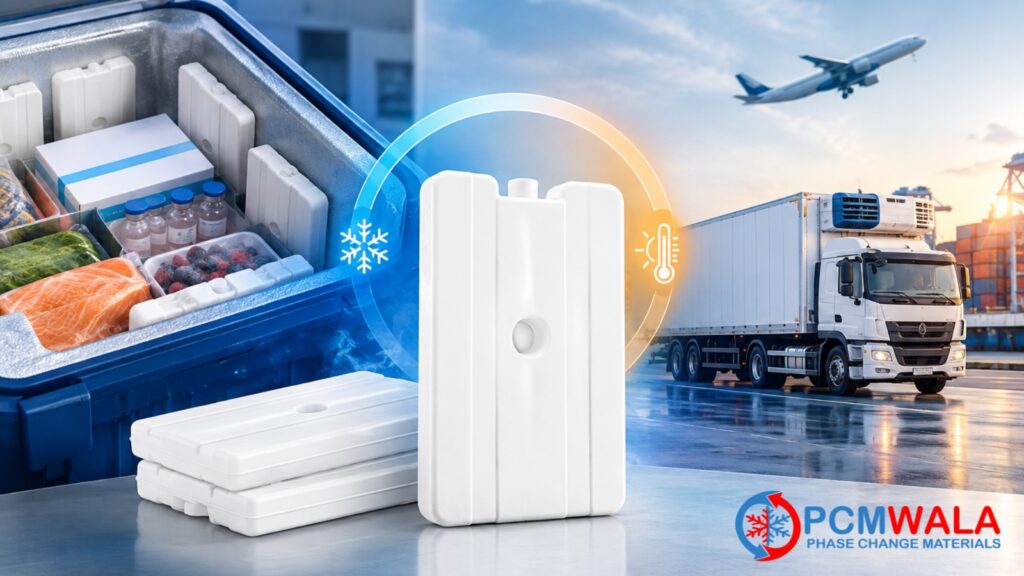
Getting heat-sensitive goods from point A to point B intact is rarely simple. Vaccines, drugs, fresh produce, dairy, and lab specimens each have a narrow band of acceptable temperatures, and a single lapse, such as a late truck, a heatwave, or a refrigeration failure, can ruin a whole consignment. For that reason, cold chain logistics depends on more than chilled trucks and cold rooms. Companies also need thermal packaging that shields goods from temperature swings while they are loaded, moved, and handed over at the destination. Phase Change Materials (PCMs) are a practical tool for this job. They soak up or give off heat as they shift between physical states, which keeps the inside of insulated packaging steadier. Paired with good insulation and chosen for the right temperature band, PCMs add a useful safety margin for delicate shipments. Used everywhere from drug distribution to meal delivery, PCMs are gaining ground among businesses that want better cold chain results. Knowing how they work makes it easier for logistics teams to pick the right thermal solution.
Understanding Phase Change Materials
A PCM is a substance that takes in or releases heat while moving between states, for example from solid to liquid and back. During that transition it can hold a large amount of thermal energy while its own temperature barely moves. Picture an insulated box with a PCM pack tuned to a specific temperature. When warmth leaks in, the pack melts and absorbs it, slowing the temperature rise around the goods. When the pack is later re-frozen (conditioned) for reuse, it gives that stored energy back to its surroundings. This ability makes PCMs valuable in temperature-controlled packaging, refrigerated transport, and any setting where steady conditions matter. PCMs generally fall into three groups:
- Organic PCMs: Paraffin-based compounds and some fatty acids. Their behavior differs with the formulation and the use case.
- Inorganic PCMs: Salt hydrates are the best-known example, valued for how well they store heat.
- Eutectic PCMs: Engineered blends designed to change phase at one precise temperature.
Because each type behaves differently, the best pick depends on the temperature range needed, how delicate the product is, the length of the trip, the packaging design, and the conditions expected en route.
Five Ways PCMs Improve Cold Chain Transportation
1. Steadier Temperatures While in Transit
Temperature instability is one of the biggest headaches in cold chain work. A single shipment may pass through cold stores, vehicles, depots, and delivery points, gaining or losing heat at every handoff. PCM packs smooth out these shifts by absorbing or releasing heat around the temperature they were designed for. Inside well-insulated packaging, they slow temperature drift and give the cargo a calmer environment. That helps when traffic, loading hold-ups, or brief exposure to outdoor air interrupt the journey. That said, the PCM must be conditioned properly and matched to the operating temperature. The amount of PCM, the insulation quality, the product load, and the trip length all shape the final result.
2. Safeguarding Pharmaceutical Products
Many medical products need tightly controlled conditions during storage and shipping. Vaccines, medicines, diagnostic items, and some biologics can lose effectiveness when they stray outside approved temperature limits.
PCMs can be built into insulated containers and purpose-designed packaging systems to help hold the required range throughout distribution. Depending on the design, they can support:
- Temperature stability on long-haul routes
- Protection from short-lived changes in outside conditions
- Dependable delivery to hospitals, pharmacies, and clinics
- Shipping to areas where constant refrigeration is hard to find
Choosing the right PCM matters a great deal, since healthcare products have different requirements and a material that suits one may not suit another. The packaging should be validated for the specific route, duration, and conditions, and temperature monitoring should confirm that products stayed within limits the whole way.
Cutting Temperature-Related Food Waste
Fresh foods such as fruit, vegetables, dairy, fish, and meat are easily affected by temperature changes during distribution. Even with refrigeration available, fluctuations can creep in during loading, unloading, transfers, and the final leg to the customer.
PCM cooling packs add another layer of defense inside insulated food packaging. They absorb incoming heat or release stored energy, which slows temperature change around the food. For distributors and delivery services, this can help to:
Keep products in good condition in transit.
Lower the chance of spoilage from heat exposure
Boost the performance of insulated delivery boxes
Support the shipment of perishables over varied distances
Results depend on the type of food, its ideal storage temperature, how much PCM is used, and how well the packaging performs. PCM packs cannot stop spoilage forever, and they do not replace proper refrigeration or food-handling practices.
4. Supporting More Energy-Efficient Operations
Holding temperatures steady takes energy, especially in refrigerated trucks, cold warehouses, and chilled distribution centers. PCMs can work alongside these systems by storing thermal energy and softening swings in cooling demand.
In the right setting, PCM-based storage can supply extra cooling when heat gain is high, and it can help insulated containers hold their target temperature through short breaks in active cooling. Possible benefits include:
Improved thermal performance of insulated packaging
Added protection during brief cooling interruptions
Chances to manage peak cooling loads
Better use of stored thermal energy in well-designed systems
The effect on energy use depends on the whole system, including insulation, refrigeration equipment, operating schedules, outside temperatures, and PCM properties. Savings should be confirmed through testing for the specific application, not taken for granted.
5. Better Control During Last-Mile Delivery
The final stretch of a journey brings its own risks. Parcels may sit in delivery vans, pass through several hands, or wait outside cold facilities before reaching their destination, which is tough on products that need a narrow temperature window.
PCM packaging offers passive protection, since it absorbs or releases heat without needing a continuous power source. Combined with proper insulation, it can keep conditions suitable through the last leg. Typical uses include:
Medicine deliveries to pharmacies and hospitals
Vaccine transport to health centers
Fresh food and dairy shipments
Movement of lab samples between sites
Direct-to-customer delivery of temperature-sensitive goods
For dependable results, test the full packaging system against realistic delivery conditions, including likely delays and outdoor temperatures.
Where PCMs Are Used in Cold Chain Logistics
PCM technology is useful across many industries, but every application needs a material and packaging setup matched to the product’s temperature needs.
Pharmaceutical and healthcare logistics: Medicines, vaccines, and diagnostic supplies travel in temperature-controlled packaging. When PCMs are part of a well-designed, validated shipping system, they help keep the required temperature.
Food and beverage transport: Distributors can place PCM packs in insulated containers to protect fresh produce, dairy, seafood, and other perishables. The material has to suit the product’s storage needs and the expected journey.
Laboratory and biological sample shipping: Labs and diagnostic centers often move samples under controlled conditions. Well-designed PCM packaging can limit unwanted temperature shifts and help preserve sample integrity.
Industrial shipments: Some industrial materials and specialty chemicals also need specific transport temperatures. PCM thermal management can work when the material’s range and compatibility meet the shipment’s demands.
Selecting the Right PCM
Picking a PCM means looking at the shipment, the packaging, and the transport environment together. A material with the right phase change temperature can still fall short if the packaging is poor or the PCM was not conditioned correctly. Keep these factors in mind:
Phase change temperature: Pick a material designed for the product’s actual required range, not just its general category.
Thermal storage capacity: Check how much energy the PCM can absorb or release during its transition. It must be enough for the expected heat load and trip length.
Transit time: Longer trips call for more careful thermal design. Assess the PCM quantity and insulation against the planned duration and possible delays.
Ambient temperature: Account for seasonal weather, loading conditions, routes, and the temperature extremes the shipment may meet.
Packaging compatibility: The PCM container should be sturdy, leak-resistant, and suited to the handling it will face and compatible with the goods being shipped.
Reusability and upkeep: Reusable packs suit regular shipping operations, but their performance relies on proper reconditioning, inspection, and handling between uses.
Validation and monitoring: Test the whole system under representative conditions, which may include thermal studies and temperature data logging to confirm limits are held for the intended duration.
A dependable cold chain system comes from how the PCM, insulation, product load, and transport environment work together. Assessing them as a unit helps businesses choose a setup that fits their operations.
What Lies Ahead for PCMs in Cold Chain Transport
Demand for reliable temperature-controlled logistics keeps rising alongside growth in pharmaceutical distribution, online grocery, healthcare delivery, and global food supply chains. Meanwhile, companies want thermal packaging that protects products better, supports efficient operations, and trims avoidable losses.
Advances in PCM formulations, reusable packaging, insulation, and temperature-monitoring technology are opening new ways to move sensitive goods. Combining these innovations can help businesses build more dependable systems for managing temperature swings across the supply chain.
PCMs will not replace refrigeration. They are an added thermal management option that complements active cooling and insulated packaging when the application is properly designed and validated.
Frequently Asked Questions
1. What do PCMs do in cold chain transportation?
They absorb or release thermal energy as they change phase. With suitable insulation, they limit temperature swings and protect sensitive goods in transit.
2. How do PCMs help ship vaccines and medicines?
Inside specialized packaging, they take in or give off heat near their designed phase change temperature, helping hold the needed range. Both the material and the packaging system must match the product’s approved storage conditions.
3. Can PCMs keep food fresh during delivery?
Yes. In properly insulated packaging, PCM packs add thermal protection for perishables. How well they work depends on the food’s temperature needs, the packaging design, and the shipping conditions.
4. Can PCMs be reused?
Many can. They must be reconditioned following the manufacturer’s instructions and inspected to make sure the packaging is still fit for further use.
5. How do I pick the right PCM?
Weigh the required temperature range, storage capacity, trip length, ambient conditions, packaging compatibility, and reusability. Test the full packaging system under realistic conditions before using it routinely.